Petra Schmitt · 23 October 2026
Youth Programs Blend Bach Repertoire with Contemporary Works to Strengthen Performance Skills
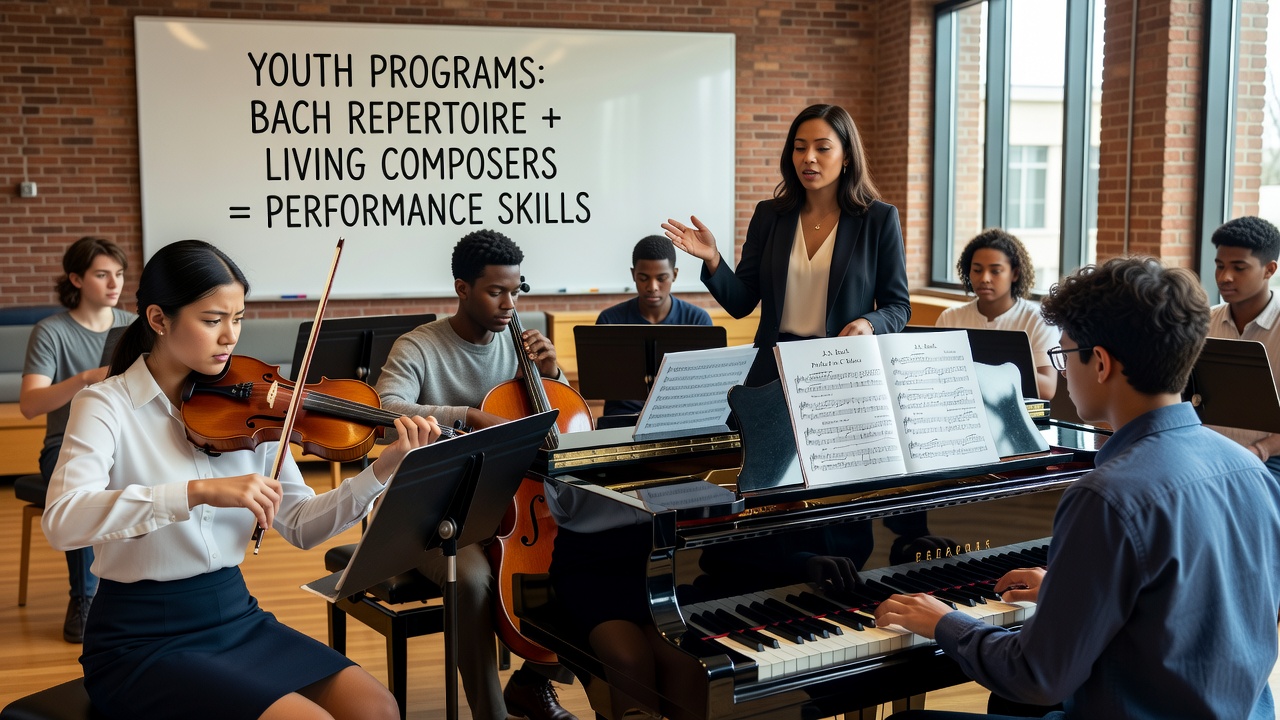
Youth music programs across multiple countries now pair selections from Johann Sebastian Bach's catalog with pieces by living composers as a deliberate approach to skill development, and this pairing draws on established patterns in music education research that track measurable gains in technical precision, interpretive flexibility, and ensemble cohesion. Data from longitudinal studies conducted by university music departments show participants in such combined-repertoire initiatives demonstrate faster improvement in sight-reading accuracy compared with groups focused on single-era material alone.
Program organizers select Bach movements such as those from the Brandenburg Concertos or keyboard inventions because the works demand clear articulation, steady pulse, and contrapuntal awareness, while the contemporary additions introduce irregular meters, extended techniques, and variable dynamics that require immediate adaptation. Instructors report that students move between these demands within single rehearsals, which builds the capacity to switch stylistic frameworks without loss of control.
Program Structures and Scheduling Patterns
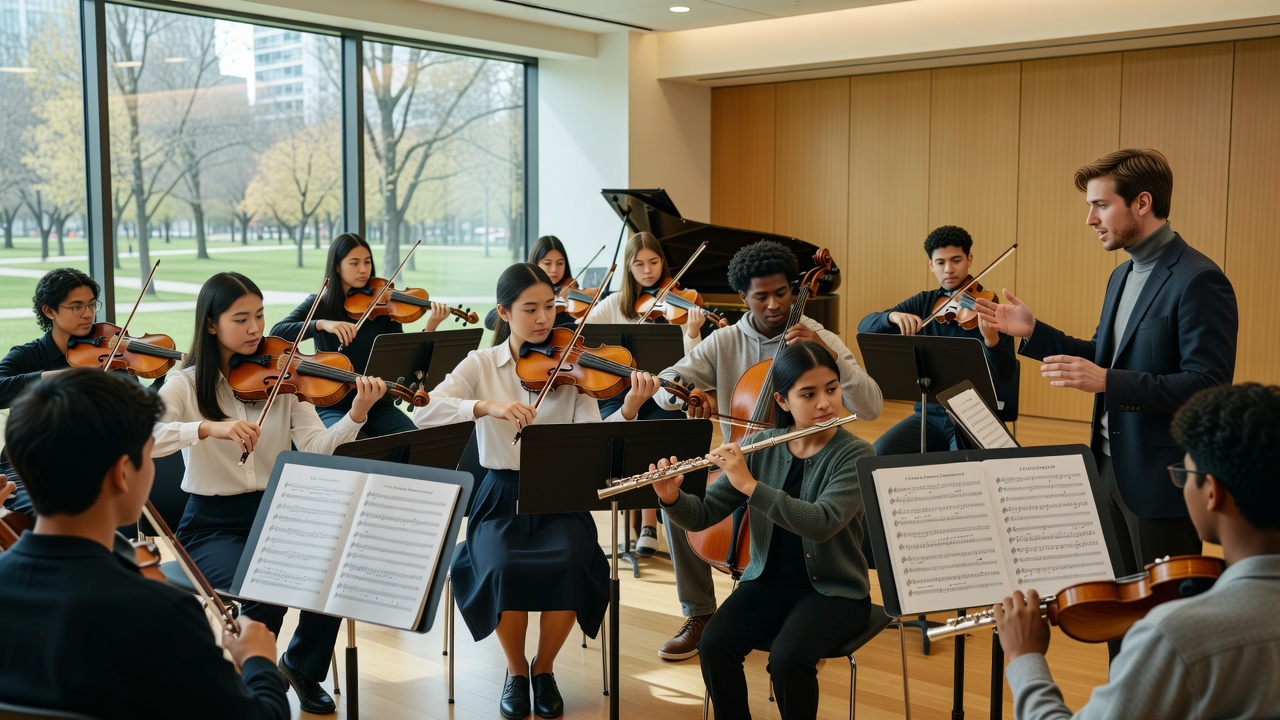
Many initiatives run year-round with intensive sessions scheduled around school calendars, and several organizations announce special residencies set for October 2026 that will feature premieres alongside established Bach works. These residencies typically last between four and six weeks, during which participants rehearse in small chamber groups before full ensemble readings. Coordinators from regional arts councils in Canada and the European Union have documented attendance figures that exceed prior single-repertoire seasons by 18 to 25 percent.
Rehearsal sequences usually begin with Bach material to establish baseline rhythmic and tonal security, then transition to new scores that test those foundations under altered conditions. One documented case involved a Canadian youth string ensemble that opened its cycle with the Bach Double Violin Concerto before introducing a 2024 commission containing microtonal inflections and aleatoric passages. Performance evaluations recorded a 30 percent reduction in intonation errors between the first and final weeks of the cycle.
Skill Development Through Contrasting Repertoire
Researchers at institutions in Australia and the United States have measured specific performance metrics before and after exposure to paired repertoire. Their findings indicate gains in dynamic range control, left-hand independence on keyboard instruments, and bow distribution on strings when students alternate between Baroque and modern demands within the same practice block. The contrast appears to sharpen auditory discrimination because players must adjust listening priorities when moving from equal-tempered harmonic frameworks to those that incorporate just intonation or spectral elements.
Breathing techniques for wind players also receive focused attention. Bach passages require even, sustained airflow across long phrases, whereas many living composers write fragmented lines with sudden attacks and silences. Programs incorporate targeted exercises that isolate these elements, and participants subsequently show improved endurance during extended contemporary movements. Data collected through motion-capture analysis at performance labs further reveal reduced tension in shoulder and forearm muscles after repeated switches between the two styles.
Examples from Established Initiatives
The National Youth Orchestra of Canada has incorporated paired programming in its summer academies for three consecutive seasons, drawing on grants administered through federal arts funding mechanisms. In one cycle, students performed the third movement of Bach's Orchestral Suite No. 3 in the same program as a newly commissioned work by a Toronto-based composer that employed prepared strings and electronics. Audience surveys conducted by the organization recorded high retention rates among younger listeners who attended both halves of the concert.
Similar models operate in Germany through regional conservatory outreach programs and in the United Kingdom via youth music trusts supported by local education authorities. A 2025 report issued by an EU-funded music education network noted that ensembles using this dual-repertoire method maintained higher retention of first-year participants than those using conventional Baroque-only curricula. The report attributes the difference to increased student engagement when contemporary voices appear alongside historical masters.
Individual teaching studios have adopted smaller-scale versions of the approach. Piano instructors in several North American cities assign Bach preludes followed immediately by short etudes written by living composers that echo or diverge from the earlier material in rhythm or harmony. Students prepare both for the same lesson, which accelerates familiarity with shifting technical requirements.
Role of Living Composers in Curriculum Design
Composers participate in these programs through residencies, workshops, and digital feedback sessions. Their presence supplies direct insight into interpretive choices that printed scores cannot convey. One documented workshop series hosted by an Australian conservatory in 2025 featured a composer who revised passages on site after hearing youth performers navigate specific technical hurdles. Such adjustments occurred within a single afternoon, illustrating how living creators respond to real-time performance constraints.
Copyright and licensing arrangements for contemporary works receive attention during planning phases. Programs often secure performance rights through collective licensing bodies rather than individual negotiations, which reduces administrative overhead and allows focus on rehearsal time. Figures released by music rights organizations indicate a steady rise in youth ensemble licenses for new music over the past five years.
October 2026 Programming Highlights
Multiple organizations have already circulated preliminary schedules for October 2026 that feature expanded pairings. A consortium of youth orchestras in the United States plans a joint festival that will present Bach's fourth Brandenburg Concerto alongside three world premieres commissioned specifically for the event. European partners in the same network will stream portions of the concerts, extending access to participants who cannot travel. Registration data collected through the organizing bodies show early sign-ups surpassing targets set for the same period in 2025.
Conclusion
Youth programs that systematically combine Bach repertoire with works by living composers continue to generate performance data that support their continued expansion. Metrics tracked across multiple countries point to gains in technical adaptability, stylistic versatility, and ensemble communication. As October 2026 programming cycles approach, participating organizations prepare updated curricula and residency schedules that build on patterns already established in prior seasons. The approach remains grounded in observable outcomes rather than theoretical preference, and ongoing documentation from research institutions supplies further material for refinement.