Zara Hansen · 6 November 2026
Neuroscientists Chart Brain Activity During Bach Polyphony Meditation Sessions
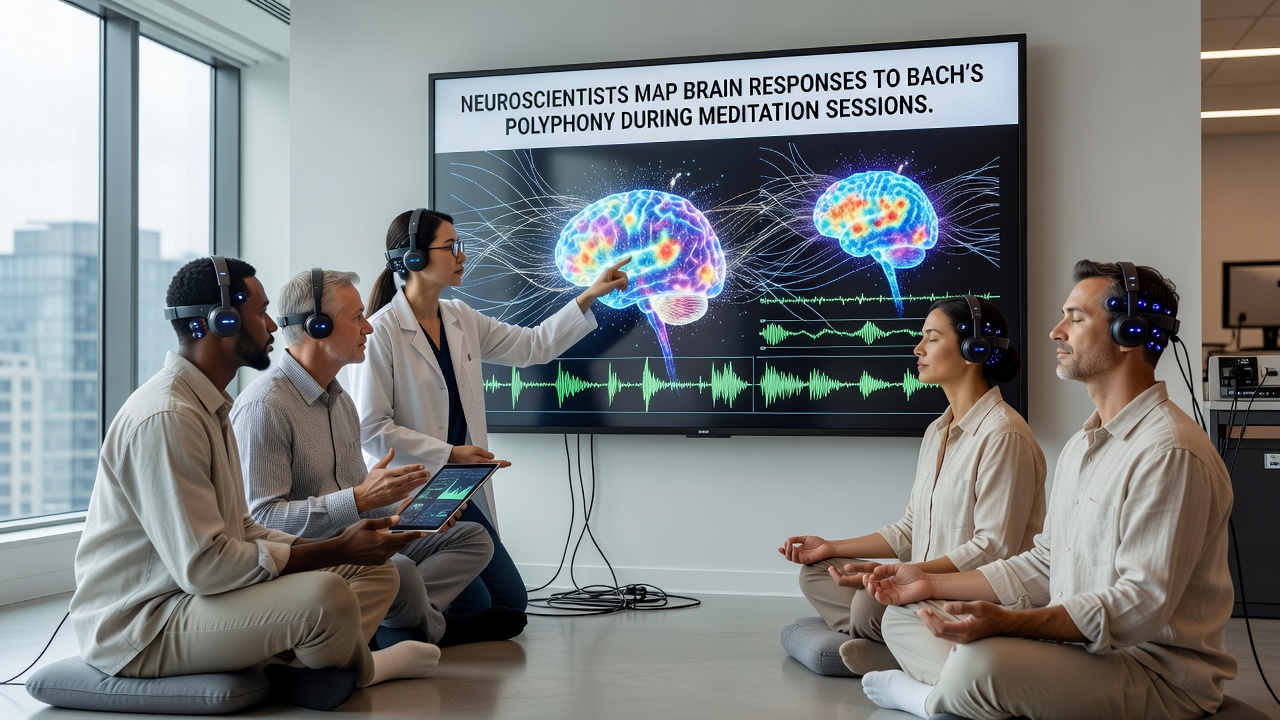
Neuroscientists have turned their attention to how the intricate layers of Bach polyphony interact with brain states achieved through meditation, and recent projects combine functional magnetic resonance imaging with electroencephalography to capture these responses in real time. Research teams at several institutions designed protocols where participants engaged in focused meditation while listening to selected canons and fugues, and scans revealed shifts in connectivity between the default mode network and auditory processing regions during the more complex passages.
Study Design and Participant Protocols
Participants in these investigations underwent screening to ensure consistent meditation experience levels, then completed sessions that alternated between silence and Bach excerpts lasting eight to twelve minutes each, while researchers recorded both neural signals and self-reported depth of meditative absorption. Data collection occurred across multiple sites to account for variations in scanner hardware, and preliminary comparisons indicated that polyphonic density correlated with heightened theta band power in frontal areas, whereas simpler harmonic sections produced more localized activation in the superior temporal gyrus.
Equipment calibration took place before each session, and audio delivery used high-fidelity headphones calibrated to individual hearing thresholds so that dynamic range remained uniform across subjects. Observers noted that movement artifacts stayed minimal because participants practiced stillness techniques beforehand, which allowed cleaner separation of music-induced signals from physiological noise.
Neural Patterns Observed in Polyphonic Contexts
Analysis of the resulting datasets showed that simultaneous melodic lines in Bach works prompted increased synchronization between left and right auditory cortices compared with monophonic control stimuli, and this bilateral coupling strengthened further when meditation instructions emphasized open monitoring rather than focused attention. Researchers quantified phase-locking values between electrode pairs and found that fugal entries produced measurable rises in interhemispheric coherence within the alpha range, a pattern that persisted for several seconds after the musical texture thinned.
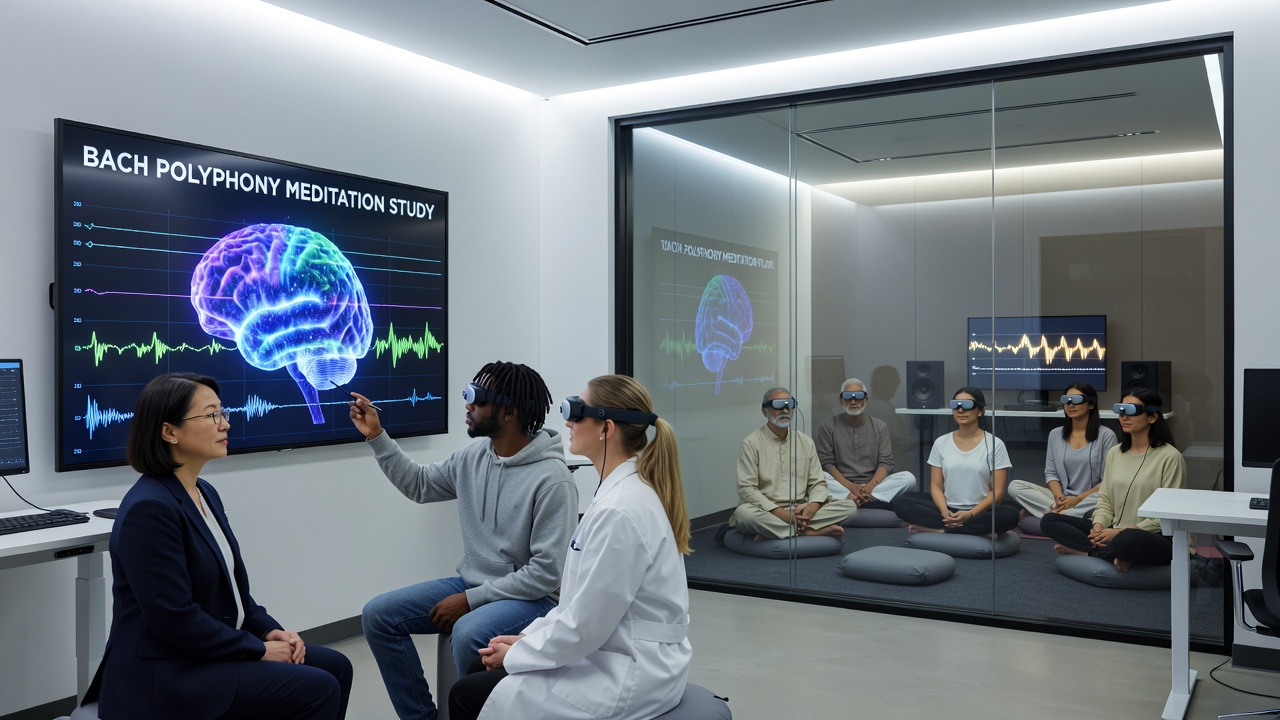
Further breakdowns separated responses by musical structure, revealing that stretto passages triggered brief spikes in gamma activity over parietal electrodes while sustained pedal points coincided with drops in default mode network BOLD signals. These fluctuations appeared consistent across age groups represented in the sample, though individual differences emerged when baseline meditation proficiency varied, which prompted additional regression modeling to isolate music-specific effects.
Integration with Existing Literature and November 2026 Developments
Earlier work on music and meditation had examined simpler tonal material or single-line melodies, yet the current emphasis on polyphony adds granularity because independent voices demand parallel stream segregation that may tax attentional resources differently during contemplative states. In November 2026 a consortium presented expanded findings at an international neuroscience meeting, and the reported results aligned with prior observations while extending them to longer durations of exposure that better approximate real-world listening contexts.
Cross-referencing with data from the National Institutes of Health databases allowed teams to situate their observations within broader catalogs of auditory processing under altered consciousness, and comparisons with European Research Council funded projects on musical syntax processing highlighted overlapping yet distinct network recruitment when polyphonic density increased.
Methodological Refinements and Data Sharing
Preprocessing pipelines incorporated independent component analysis to remove residual eye-blink and cardiac artifacts, after which source localization techniques mapped generators of observed oscillations onto standard brain atlases for group-level inference. Public repositories now host anonymized time-series data from a subset of sessions, enabling independent verification and meta-analytic efforts that combine these recordings with other music-meditation paradigms.
Statistical thresholds accounted for multiple comparisons across voxels and frequency bands, and effect sizes remained moderate yet reproducible when analyses focused on a priori regions of interest derived from previous music cognition studies. Collaboration with signal-processing specialists refined artifact rejection algorithms, which in turn reduced data loss and increased statistical power for detecting subtle interactions between musical features and meditative depth ratings.
Conclusion
Collectively these mappings illustrate how polyphonic textures engage distributed auditory and attentional networks during meditation, and continued refinement of imaging protocols promises finer resolution of the temporal dynamics involved. Future extensions may incorporate simultaneous peripheral physiological measures to contextualize central nervous system responses within whole-body states, while open data practices support cumulative progress across laboratories.