Vera Schmitt · 31 August 2026
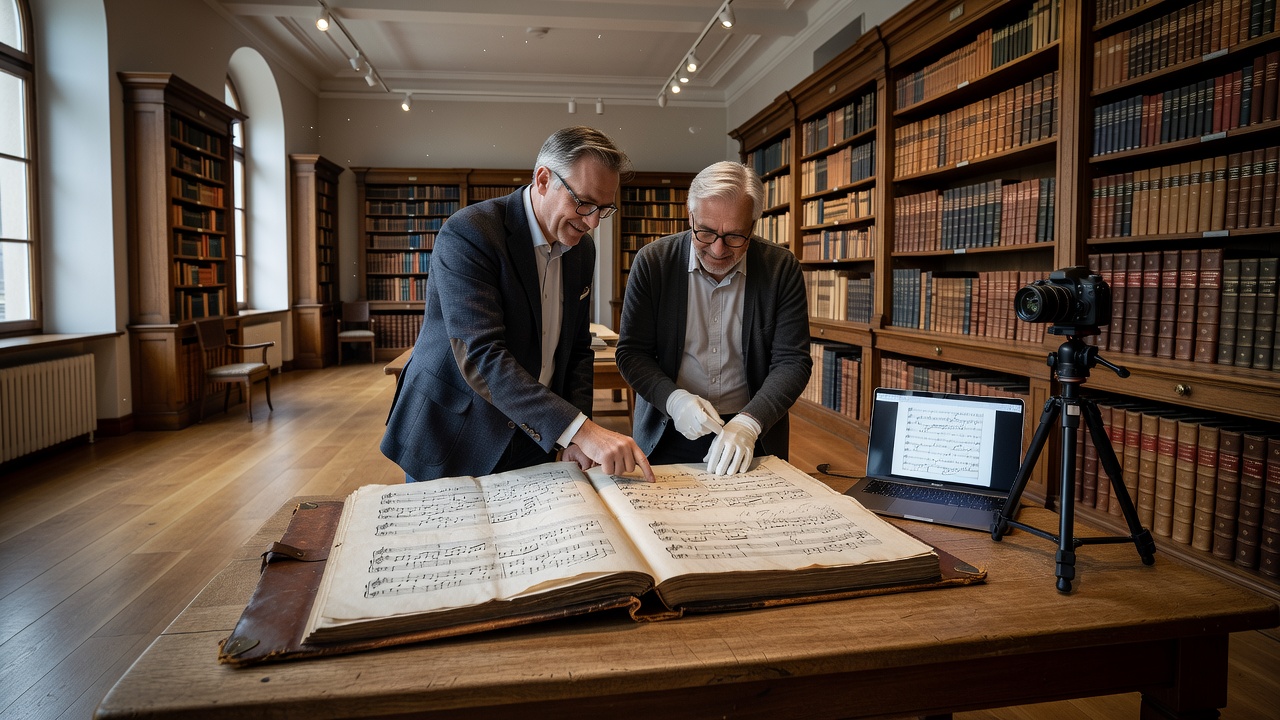
The Bach-Archiv Leipzig has announced the discovery of previously unknown chorale sketches attributed to Johann Sebastian Bach. Found during routine cataloging of 18th-century manuscripts, the materials include fragmentary notations for four chorales linked to cantatas BWV 4 and BWV 140. Archivists date the papers to around 1730 based on watermark analysis and handwriting comparisons.
Contents of the Newly Found Sketches
Each sketch consists of soprano and bass lines with figured bass indications. One fragment shows an alternate harmonization for the melody "Christ lag in Todesbanden," differing from the published version in the use of a descending chromatic line in the alto voice. Researchers note that the sketches lack full inner voices, suggesting they served as preliminary drafts rather than performance copies. The archive plans high-resolution digitization and will release facsimiles to scholars by the end of the year. Initial examination reveals no contradictory evidence against Bach's authorship, though further paleographic study is required.
Conservators have stabilized the fragile paper using Japanese tissue and stored the items in climate-controlled conditions. The discovery adds to the archive's collection of over 1,200 Bach-related documents. Musicologists from the University of Leipzig are preparing a critical edition that will compare the new material with known sources in the Neue Bach-Ausgabe.
Impact on Bach Research
Experts suggest the sketches may illuminate Bach's compositional process during his Leipzig period. Professor Anna Richter stated that the chromatic alterations could indicate experimentation with expressive devices later refined in the St. Matthew Passion. The find also raises questions about lost chorale preludes referenced in contemporary accounts but never located. International conferences scheduled for 2025 will discuss the implications for performance practice and source criticism. Funding from the German Research Foundation will support ongoing analysis, including ink composition tests to confirm dating. The archive emphasizes open access to the materials for qualified researchers worldwide.